
Modern work experience: Making it work for young people and employers
“What do you want to do when you grow up?”
It’s a familiar question – often asked at the same time young people are expected to make subject and pathway choices they don’t yet fully understand.
For many young people, the world of work feels distant or abstract. For others, access to opportunity depends too heavily on circumstance, confidence, or connections.
But change is coming.
Across government, education, the third sector and employers, there is growing momentum to build a system where careers education is not a single moment in Year 10, but a series of meaningful, progressive experiences that help young people understand themselves, the world of work, and the pathways available to them from an earlier age.
Employers have a vital role to play in that shift. Not by reinventing everything they do, but by making existing engagement clearer, more inclusive, and easier for young people to access and understand.
Why this matters for employers
It’s not just about social impact. It’s your opportunity to help shape the workforce of tomorrow by supporting young people before they ever submit an application. It helps build awareness, capability, aspiration and ultimately strengthens talent pipelines.
What do we mean by modern work experience?
Modern work experience is built around a simple but ambitious idea: every young person, regardless of their background or circumstances, should have access to the equivalent of two weeks’ worth of quality work experience - around 10 days in total - across their secondary education.
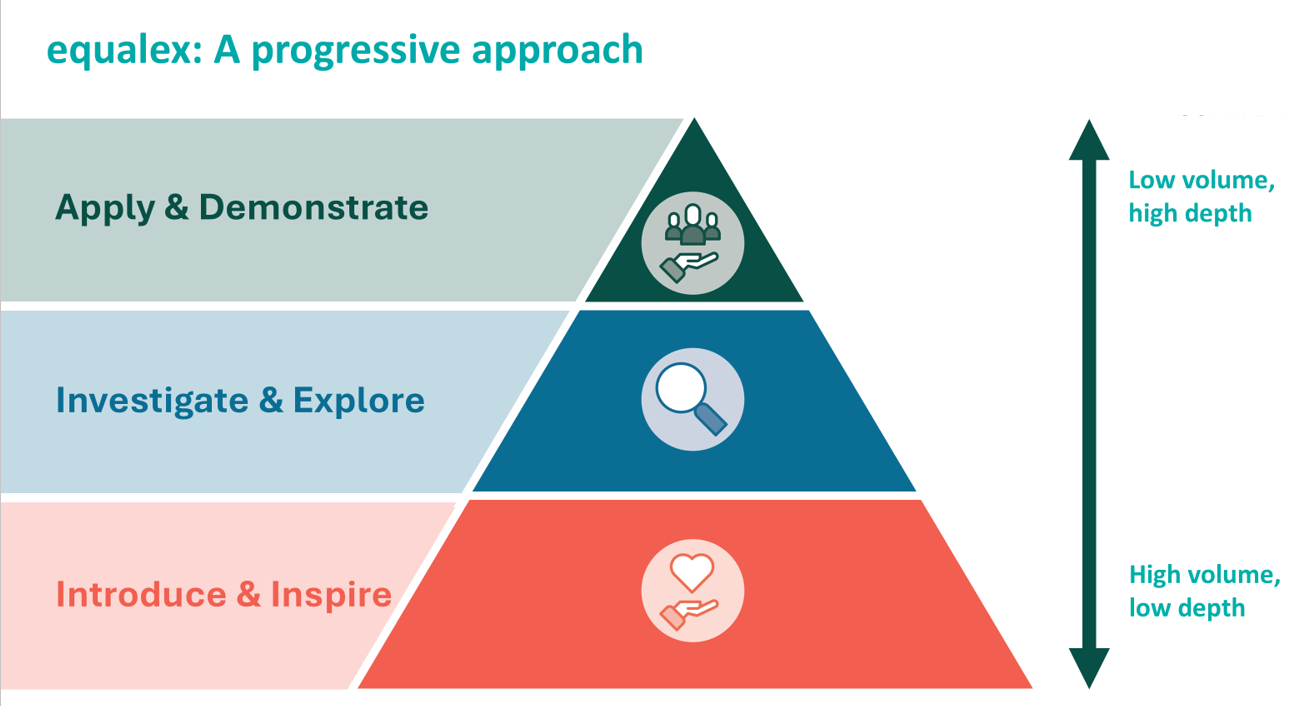
Rather than being concentrated into a single block, these experiences are spread over time. Five days take place during Key Stage 3 (Years 7-9), with the remaining five days happening in Key Stage 4 (Years 10-11).
Earlier experiences are about exploration, not career decisions. They help young people build awareness, challenge assumptions, and understand what they are curious about. Exposure to a wide range of roles, sectors, and people broadens what feels possible.
By the time students reach Key Stage 4, these early experiences mean choices are more likely to be shaped by genuine interest and understanding, rather than limited exposure.
What does this look like in practice?
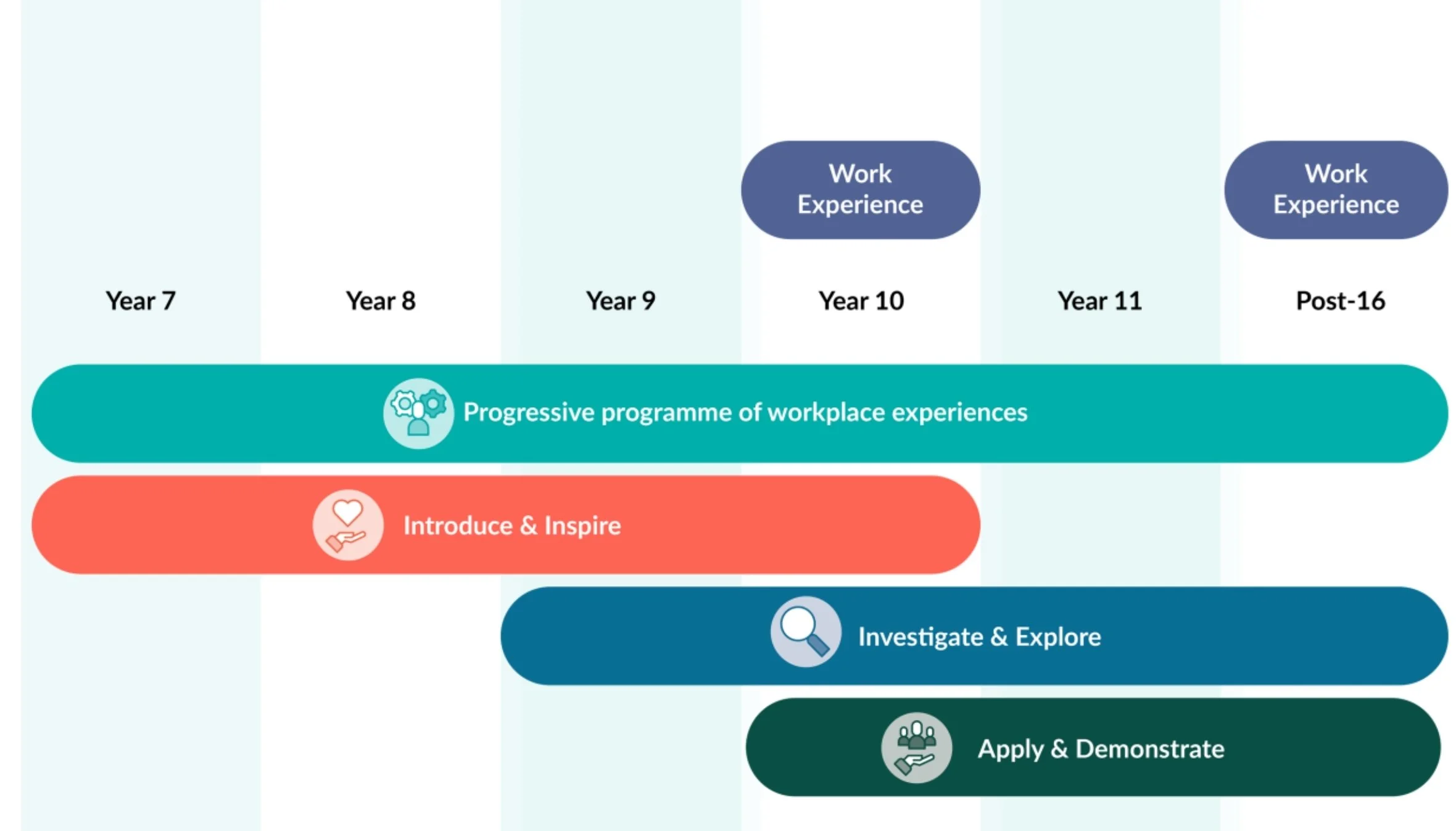
Years 7–9:
A range of short, varied, employer-led activities focused on exploration. These might include talks, projects, workplace visits, virtual sessions, or small group interactions. The aim is to help students encounter different industries, ask questions, and see what work really looks like.
Years 10–11:
More focused placement experiences, typically totalling around one week (five days). These allow young people to spend sustained time in a workplace, develop core work-based skills and behaviours, and connect classroom learning to real working environments.
Modern work experience works for employers of all sizes
Modern work experience isn’t just for large organisations with dedicated early careers teams. It can work just as well for small and medium-sized employers.
Because experiences are spread over time and can take many different forms, modern work experience is often lower burden and higher impact. A short talk, a virtual insight session, a small group project, or a one-day visit can be just as valuable as a longer placement when delivered with clear intention.
What matters most is not scale, it’s purpose.
Insights from the Equalex pilot show that employers are particularly keen to engage when there is a shared structure and language. Using the same framework as schools helps employers see how their activities fit into a young person’s wider journey, making it easier to co-create experiences that support skill development, confidence, and progression - rather than isolated one-off encounters.
Where to start
For most employers, the best place to start is with what you already do.
Many organisations are already providing meaningful experiences without necessarily labelling them as “work experience”. Mapping existing activity, from talks and projects to mentoring, placements, or events, helps identify what’s working well, where there may be gaps, and where there is opportunity to evolve over time.
To support this reflection, we’ve created a Modern Work Experience Partner Checklist. It’s designed as a practical, supportive tool, not a compliance exercise, to help employers reflect on their current offer against what modern work experience looks like in practice.
Future First can help you make meaningful connections with schools and young people in your community, or shaping activity that works for your organisation.
